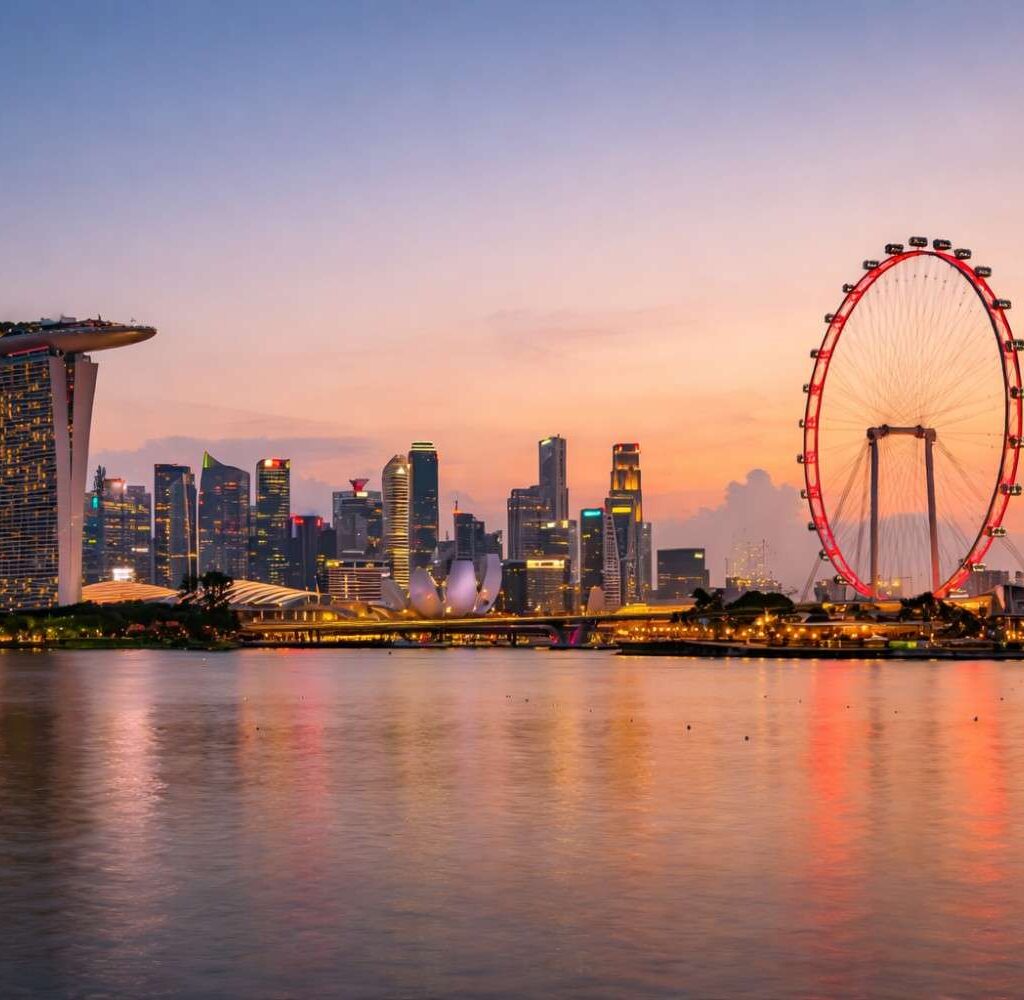
this image shows a view of the marina bay sands and the singapore flyer from the water

About Singapore

this image shows a view of the marina bay sands and the singapore flyer from the water

Introduction to Singapore

Singapore, officially known as the Republic of Singapore, is a small but highly developed island nation in Southeast Asia. It lies about one degree north of the equator. Even though it is one of the smallest countries in the world, it has become one of the most powerful economies globally. This blog will give you all the basic information you need about Singapore.

Location and Physical Features

Singapore is located at the southern tip of the Malay Peninsula. It is surrounded by important water routes such as the Strait of Malacca and the South China Sea. These routes are some of the busiest shipping lanes in the world, which makes the country very important for global trade.

The country consists of one main island and over 60 smaller islands. Some well-known islands include Sentosa and Jurong Island. Singapore has increased its land area over time through land reclamation, which means creating new land from the sea.

Meaning of the Name

The name “Singapore” comes from the Sanskrit words “Simha” (lion) and “Pura” (city), meaning “Lion City.” According to legend, a prince named Sang Nila Utama saw a lion on the island and decided to name it Singapura.

In earlier times, Singapore was also known as Temasek, which means “Sea Town.” This shows its early importance as a trading port.

Early History

In ancient times, Singapore was an important trading center. It was influenced by powerful empires like Majapahit and Srivijaya. Traders from China, India, and the Middle East visited the island.

Later, the island became less important and was even destroyed by Portuguese forces in the 17th century. For many years, it remained quiet and less developed.

British Colonisation

Modern Singapore began in 1819 when Stamford Raffles established a British trading post there. He saw its strategic location and realized it could become a major port.

Under British rule, the country grew rapidly. People from China, India, and other regions migrated there for work. By the late 19th century, it became one of the busiest ports in the world.

World War II Period

During World War II, Singapore was invaded and occupied by Japan in 1942. This period was very difficult for the people, with shortages of food and strict control by the Japanese army.

In 1945, after Japan surrendered, Singapore returned to British control. However, people began demanding independence after seeing that the British could not fully protect them.

Road to Independence

Singapore gained self-government in 1959, and Lee Kuan Yew became its first Prime Minister. In 1963, Singapore joined Malaysia along with other regions.

However, due to political and racial tensions, Singapore was separated from Malaysia in 1965. It then became an independent country.

Development After Independence

At the time of independence, Singapore had many problems such as unemployment, lack of natural resources, and housing shortages. Despite this, the government focused on industrialization, education, and attracting foreign investment.

Under the leadership of Lee Kuan Yew, Singapore transformed rapidly. It became one of the “Four Asian Tigers,” known for fast economic growth.

Singapore’s Economy

Today, Singapore has one of the strongest economies in the world. It is a global hub for banking, finance, trade, and transportation. The Port of Singapore is among the busiest ports globally.

It is also home to many international companies and has a very business-friendly environment. However, it is often considered expensive to live in.

Society and Culture

Singapore is a multicultural country with people from different backgrounds. The main ethnic groups are Chinese, Malay, and Indian. Because of this diversity, the country celebrates many festivals from different cultures.

There are four official languages: English, Malay, Mandarin, and Tamil. English is the main working language and is used in schools and business.

Education and Healthcare

Singapore has one of the best education systems in the world. Students perform very well in global rankings, especially in mathematics and science.

Healthcare is also advanced and efficient. The country has one of the highest life expectancies in the world and very low infant mortality rates.

Government and Politics

Singapore is a parliamentary republic. It has elections, but the People’s Action Party has been in power since 1959.

The government is known for being strict but effective. It focuses on maintaining order, economic growth, and low corruption.

Laws and Safety

Singapore is famous for its strict laws. There are heavy fines for activities like littering, vandalism, and drug-related crimes. Because of this, it is one of the safest countries in the world.

Crime rates are very low, and people feel safe walking even at night.

Environment and “Garden City”

Despite being highly urbanized, Singapore is known as a “Garden City.” It has many parks, gardens, and green spaces.

Places like the Botanic Gardens are famous worldwide. The government has made strong efforts to balance development with nature.

Climate

Singapore has a tropical climate, meaning it is hot and humid throughout the year. There are no clear seasons, but it experiences frequent rainfall.

Temperatures usually stay between 23°C and 32°C. The country also sometimes faces haze due to forest fires in nearby regions.

Global Importance

Singapore plays an important role in international affairs. It is a founding member of ASEAN and is also part of the United Nations and World Trade Organization.

It hosts many global meetings and is considered a key financial and business center.

Conclusion

Singapore is a great example of how a small country can achieve big success. From a small trading port to a modern global city, it has grown through strong leadership, planning, and unity among its people.


Site Icon

Visa and Entry Requirements For Indians in Singapore

For Indian travellers, visiting Singapore for up to 30 days is generally a smooth process if all visa and entry requirements are met. A tourist visa, also known as a Short-Term Visit Pass, must be obtained before arrival. Visa-on-arrival is not available.

Visa Application Requirements

To apply for a visa for business or social visits, you will need the following documents:

  • A duly completed Form 14A signed by you. Your visa application will be processed based on the information provided in this form. The Immigration and Checkpoints Authority (ICA) may request a copy of this form.

  • A recent passport-sized colour photograph taken within the last three months. Refer to official photo guidelines for specifications.

  • A photocopy of your passport biodata page. Your passport must be valid for at least six months from the date of entry into Singapore.

How to Apply

You can submit your visa application in the following ways:

  • Through a local contact in Singapore

  • Through your nearest Singapore Overseas Mission

  • Through an authorised visa agent

Processing Time

Most visa applications are processed within three working days. In some cases, processing may take longer.

Additional Travel Preparation

To ensure a smooth travel experience, it is advisable to prepare the following:

  • A valid passport with at least six months validity

  • Recent passport-sized photographs

  • Confirmed return tickets

  • Proof of accommodation

  • Bank statements showing sufficient funds for your stay

After Visa Approval

Once approved, the visa typically allows a stay of up to 30 days per visit. The exact duration is decided by immigration officers upon arrival.

Before entering Singapore, you must complete the SG Arrival Card online. This helps speed up immigration procedures.

On Arrival

At immigration, you may be asked to present supporting documents. Keep all necessary paperwork easily accessible.

With proper preparation, entering Singapore can be a straightforward process. While it may seem complex at first, the visa process is manageable when you have the required documents ready.

More Information

For detailed and updated information, visit the official ICA website:
https://www.ica.gov.sg/enter-transit-depart/entering-singapore/visa_requirements/visa-detail-page/india


Introduction to Munnar: Why Munnar is Famous for Tea Gardens, Scenic Hills, and Wildlife

Introduction to Munnar: Why Munnar is Famous

Introduction to Munnar: Why Munnar is Famous for Tea Gardens, Scenic Hills, and Wildlife

Introduction to Munnar

Imagine waking up to rolling green hills covered with endless tea plantations. Cool mist slowly drifts across the mountains. The fresh mountain air instantly refreshes your mind.

This is the magic of Munnar, one of the most beautiful hill stations in India.

Located in the Western Ghats of Kerala, Munnar sits about 1,600 meters above sea level. The town offers a cool climate and stunning natural scenery throughout the year.

Travelers visiting Kerala often include Munnar in their itinerary. The destination is famous for its tea plantations, scenic hills, waterfalls, and rich wildlife.

But Munnar is not just about landscapes. The region also has an interesting history. During the British colonial era, it served as a summer retreat for British officials and tea planters.

Today, Munnar is known worldwide for its vast tea estates, misty mountains, and peaceful valleys. These landscapes create one of the most picturesque destinations in South India.

Whether you love nature, photography, or quiet mountain escapes, Munnar offers a truly unforgettable travel experience.

Where is Munnar Located?

Munnar lies in the Idukki district of Kerala in southern India. It sits in the beautiful Western Ghats mountain range, which is famous for its rich biodiversity.

The name “Munnar” literally means “three rivers.” In fact, the town stands at the meeting point of three rivers — Mudhirapuzha, Nallathanni, and Kundaly.

Because of its elevation, Munnar sits about 1,600 meters above sea level. As a result, the region enjoys a cool and refreshing climate throughout the year.

Moreover, the surrounding mountains create breathtaking landscapes filled with valleys, forests, and tea plantations.

For this reason, travelers often call Munnar the “Kashmir of South India.” The nickname highlights its misty hills, green scenery, and peaceful environment.

Additionally, Munnar forms an important part of the Western Ghats ecosystem. UNESCO also recognizes this mountain range as a World Heritage Site because of its ecological significance.

Therefore, Munnar is not only a scenic hill station but also a region with incredible environmental importance.

Introduction to Munnar: Why Munnar is Famous for Tea Gardens, Scenic Hills, and Wildlife

Why Munnar is Famous for Tea Gardens

The Heart of India’s Tea Country

One of the first things visitors notice when entering Munnar is the breathtaking view of rolling hills covered with tea plantations. These plantations stretch across miles of mountains, creating a carpet of vibrant green landscapes.

The tea industry in Munnar dates back to the late 19th century, when the British established large plantations in the region. Today, these plantations are managed by major companies like Tata Consumer Products, and Munnar remains one of the most important tea-producing regions in India.

You can explore the history of tea production at the Tata Tea Museum, which showcases the evolution of tea cultivation in the region.

What Makes Munnar Tea Unique?

Several natural factors make tea from Munnar special:

  • High altitude plantations
  • Cool climate
  • Frequent mist and rainfall
  • Rich mountain soil

These conditions create tea leaves with distinct aroma and flavor, making Munnar tea highly valued in international markets.

Tea Experiences in Munnar

Visitors can enjoy several tea-related experiences:

  • Walking through tea plantations
  • Visiting tea factories
  • Watching traditional tea leaf processing
  • Tasting freshly brewed high-altitude tea

One of the most memorable experiences is simply standing on a hilltop and watching the perfectly patterned tea fields stretch across the valleys.

Scenic Hills and Breathtaking Landscapes of Munnar

If tea gardens give Munnar its identity, the surrounding mountains give it breathtaking beauty. In fact, the region features rolling hills, deep valleys, waterfalls, and lush forests.

Moreover, the constantly shifting mist creates dramatic landscapes that change throughout the day. As a result, photographers and nature lovers find Munnar incredibly rewarding.

For example, many viewpoints across the region offer panoramic views of the Western Ghats.

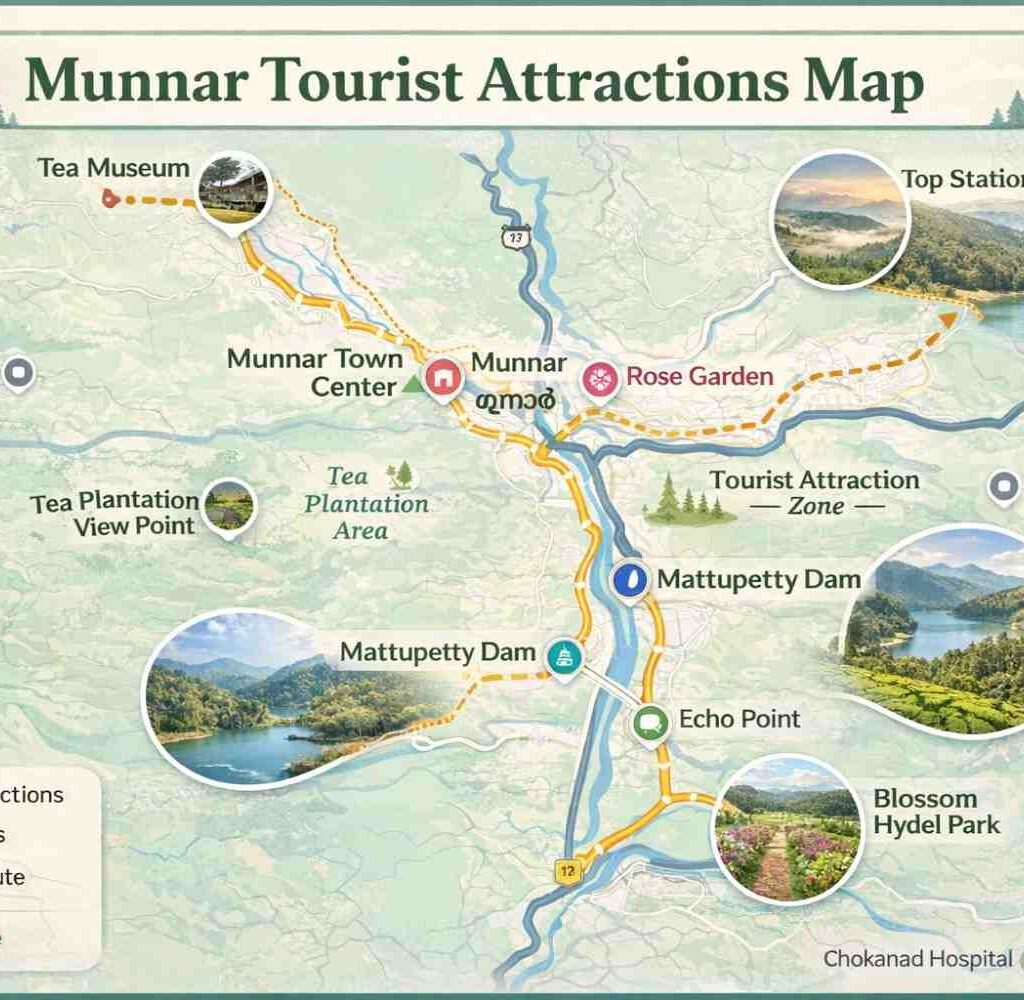
Top Station

One of the highest points in Munnar is Top Station. From here, visitors can see spectacular views of the Western Ghats and the plains of Tamil Nadu. Additionally, the sunrise from this viewpoint is particularly stunning.

Echo Point

Echo Point lies near Mattupetty Lake. Interestingly, the area produces a natural echo when visitors shout across the hills. Besides that, the surrounding lake and mountains create a peaceful atmosphere.

Mattupetty Dam

Meanwhile, Mattupetty Dam offers calm lake views surrounded by green hills. Visitors can also enjoy boating here. Therefore, it has become one of the most relaxing spots in Munnar.

Attukad Waterfalls

Another beautiful attraction is Attukad Waterfalls. The waterfall flows between hills and forests. Especially during the monsoon season, the water flow becomes powerful and visually stunning.

Overall, these scenic landscapes make Munnar a paradise for road trips, photography, and nature

Wildlife and Biodiversity in Munnar

Beyond its scenic beauty, Munnar is also a major biodiversity hotspot. In fact, the region lies within the Western Ghats, one of the most important ecological zones in the world.

Because of its altitude and forest cover, many rare species live in this region. As a result, scientists and conservationists consider the area extremely valuable.

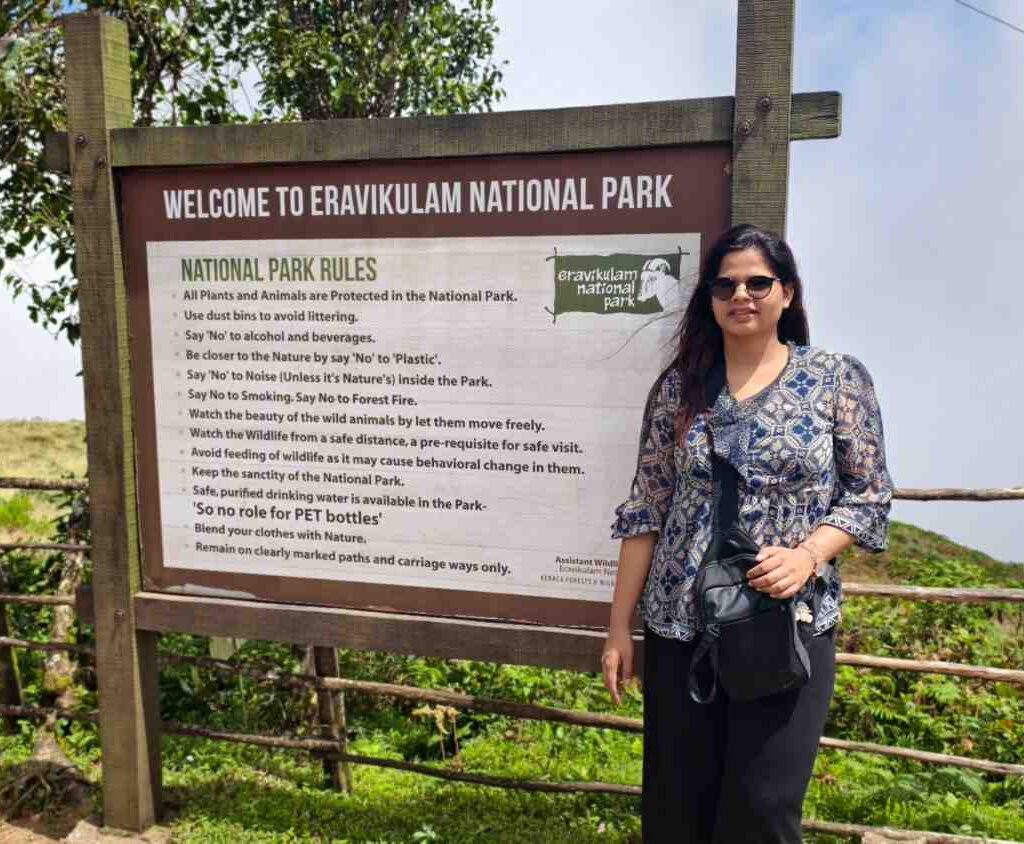
Eravikulam National Park

One of the most famous wildlife destinations near Munnar is Eravikulam National Park.

The park protects the endangered Nilgiri Tahr, a mountain goat species found only in this part of India. Therefore, the park plays a critical role in wildlife conservation.

Moreover, Eravikulam National Park offers breathtaking mountain views and trekking trails.

Another fascinating highlight is the Neelakurinji flower. Interestingly, this rare flower blooms only once every 12 years, covering the hills in a beautiful purple shade.

Introduction to Munnar: Why Munnar is Famous for Tea Gardens, Scenic Hills, and Wildlife

Visitors may also spot wildlife such as:

  • Nilgiri Tahr
  • Indian gaur
  • Sambar deer
  • Wild elephants
  • Several bird species

In addition, the park offers scenic viewpoints that allow visitors to observe wildlife in their natural habitat.

Chinnar Wildlife Sanctuary

Another important wildlife destination near Munnar is Chinnar Wildlife Sanctuary.

Unlike the lush green landscapes of Munnar, Chinnar has a drier ecosystem. However, it supports unique species that cannot survive in wetter forests.

For example, visitors may see:

  • Star tortoises
  • Grizzled giant squirrels
  • Rare reptiles and birds

Consequently, wildlife lovers often visit Chinnar for its diverse ecosystems and safari experiences.

Cultural and Historical Significance of Munnar

While nature defines Munnar today, its modern development began during the British colonial era.

During the late 19th century, British planters discovered that Munnar’s cool climate and high altitude were perfect for tea cultivation. As a result, large tea plantations quickly spread across the hills.

Soon afterward, plantation companies began building roads, bungalows, and factories to support tea production.

Even today, visitors can still see traces of this colonial history. For instance, several tea estate bungalows still reflect classic British architecture.

Moreover, old churches and plantation buildings continue to stand in the region.

These structures remind visitors of the early days of tea cultivation in Munnar.

Meanwhile, the tea industry continues to shape the local culture and economy.

Therefore, Munnar represents not only natural beauty but also an important chapter in India’s plantation history nation.

Why Munnar Should Be on Every Traveler’s List

What makes Munnar truly unforgettable is the perfect balance between natural beauty and peaceful atmosphere.

Here’s why travelers fall in love with Munnar:

  • Endless tea plantations
  • Misty mountain landscapes
  • Unique wildlife and biodiversity
  • Cool hill station climate
  • Scenic road trips and viewpoints

Unlike crowded city destinations, Munnar allows you to slow down and reconnect with nature.

Best Time to Visit Munnar

While Munnar can be visited throughout the year, the experience varies depending on the season.

September to March (Best Season)

  • Cool weather
  • Clear mountain views
  • Ideal for sightseeing and trekking

April to June

  • Slightly warmer but still pleasant
  • Popular summer escape

July to August (Monsoon)

  • Heavy rains
  • Lush green landscapes
  • Best for waterfall lovers

Most travellers consider October to February the most comfortable time to visit.

A Practical Snapshot of Munnar

To help you plan your introduction to this hill station, here is a quick breakdown of what to expect:

FeatureDetailsInsider Tip
Best Time to VisitSeptember – MayWinter (Dec-Feb) is peak season. The post-monsoon (Sep-Nov) greenery is unparalleled.
Signature FlavorFresh Tea & SpicesTry the “Kerala Parotta” with spicy veg kurma at a local eatery, not just hotel restaurants.
Key Wildlife SpotEravikulam National ParkGo as early as possible (7:30 AM) to see the Tahrs most active before the crowds arrive.
Scenic DriveThe route to KolukkumalaiThis road is bumpy, but it leads to the highest tea plantation in the world.
Accommodation VibeLuxury Resorts to HomestaysFor an authentic experience, stay in a former planter’s bungalow converted into a hotel

Conclusion: The Last Hill Station

There is a reason Munnar remains one of the most visited destinations in South India. However, unlike many popular tourist spots that lose their charm under the weight of commercialization, Munnar has managed to retain its soul. Indeed, it is a place where the colonial past meets modern conservation efforts, and where the rows of tea plants are as geometrically precise as they are naturally beautiful.

Furthermore, it is a destination that demands you slow down. In fact, you cannot rush through Munnar. Instead, you have to sit by the window, cup of tea in hand, and watch the mist roll in. Similarly, you have to practice patience when searching for wildlife; the Nilgiri Tahr won’t pose for your camera on command. Above all, you have to breathe the thin, clean air and simply exist in the moment.

Ultimately, whether you come for the famous tea gardens, the scenic hills, or the wildlife, you will leave with a sense of tranquility that only the mountains can provide. So, pack a jacket, bring your camera, and prepare to lose yourself in the emerald folds of the Western Ghats.