
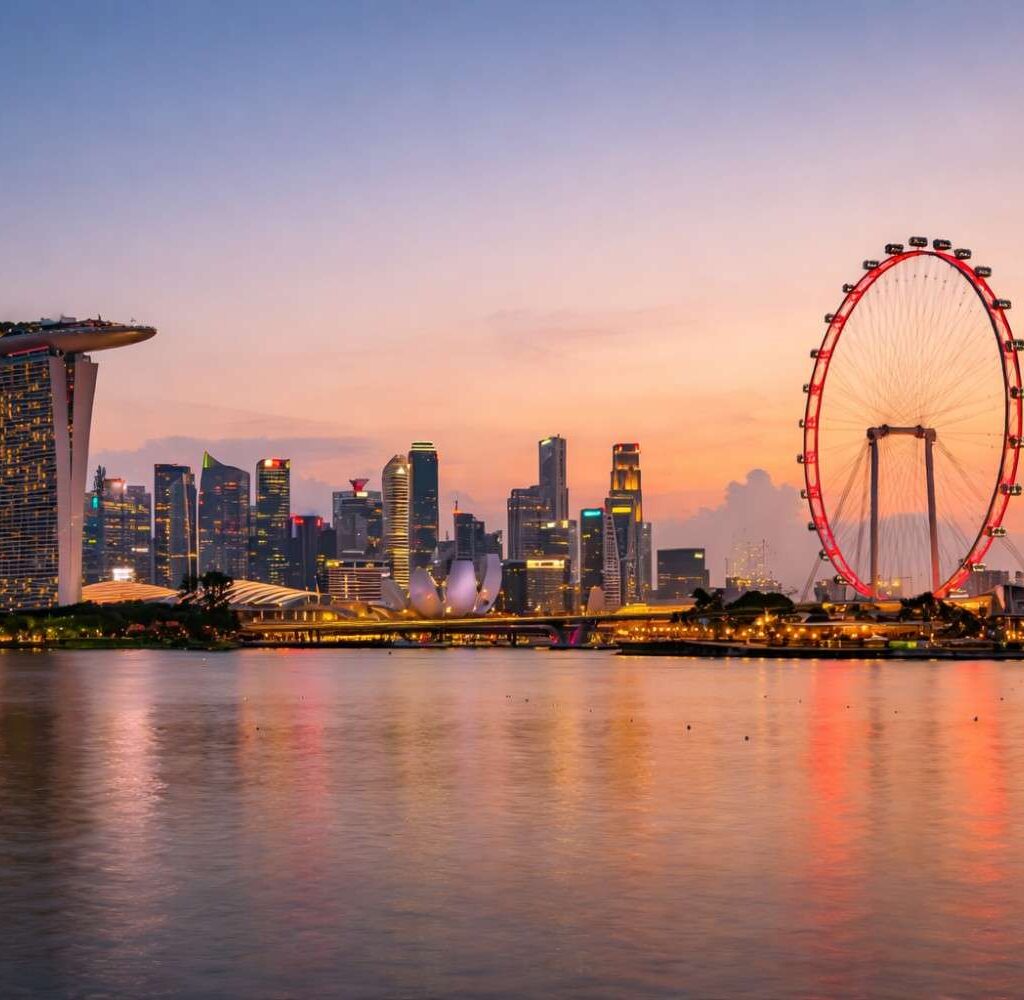
Introduction to Singapore
Singapore, officially known as the Republic of Singapore, is a small but highly developed island nation in Southeast Asia. It lies about one degree north of the equator. Even though it is one of the smallest countries in the world, it has become one of the most powerful economies globally. This blog will give you all the basic information you need about Singapore.
Location and Physical Features
Singapore is located at the southern tip of the Malay Peninsula. It is surrounded by important water routes such as the Strait of Malacca and the South China Sea. These routes are some of the busiest shipping lanes in the world, which makes the country very important for global trade.
The country consists of one main island and over 60 smaller islands. Some well-known islands include Sentosa and Jurong Island. Singapore has increased its land area over time through land reclamation, which means creating new land from the sea.
Meaning of the Name
The name “Singapore” comes from the Sanskrit words “Simha” (lion) and “Pura” (city), meaning “Lion City.” According to legend, a prince named Sang Nila Utama saw a lion on the island and decided to name it Singapura.
In earlier times, Singapore was also known as Temasek, which means “Sea Town.” This shows its early importance as a trading port.
Early History
In ancient times, Singapore was an important trading center. It was influenced by powerful empires like Majapahit and Srivijaya. Traders from China, India, and the Middle East visited the island.
Later, the island became less important and was even destroyed by Portuguese forces in the 17th century. For many years, it remained quiet and less developed.
British Colonisation
Modern Singapore began in 1819 when Stamford Raffles established a British trading post there. He saw its strategic location and realized it could become a major port.
Under British rule, the country grew rapidly. People from China, India, and other regions migrated there for work. By the late 19th century, it became one of the busiest ports in the world.
World War II Period
During World War II, Singapore was invaded and occupied by Japan in 1942. This period was very difficult for the people, with shortages of food and strict control by the Japanese army.
In 1945, after Japan surrendered, Singapore returned to British control. However, people began demanding independence after seeing that the British could not fully protect them.
Road to Independence
Singapore gained self-government in 1959, and Lee Kuan Yew became its first Prime Minister. In 1963, Singapore joined Malaysia along with other regions.
However, due to political and racial tensions, Singapore was separated from Malaysia in 1965. It then became an independent country.
Development After Independence
At the time of independence, Singapore had many problems such as unemployment, lack of natural resources, and housing shortages. Despite this, the government focused on industrialization, education, and attracting foreign investment.
Under the leadership of Lee Kuan Yew, Singapore transformed rapidly. It became one of the “Four Asian Tigers,” known for fast economic growth.
Singapore’s Economy
Today, Singapore has one of the strongest economies in the world. It is a global hub for banking, finance, trade, and transportation. The Port of Singapore is among the busiest ports globally.
It is also home to many international companies and has a very business-friendly environment. However, it is often considered expensive to live in.
Society and Culture
Singapore is a multicultural country with people from different backgrounds. The main ethnic groups are Chinese, Malay, and Indian. Because of this diversity, the country celebrates many festivals from different cultures.
There are four official languages: English, Malay, Mandarin, and Tamil. English is the main working language and is used in schools and business.
Education and Healthcare
Singapore has one of the best education systems in the world. Students perform very well in global rankings, especially in mathematics and science.
Healthcare is also advanced and efficient. The country has one of the highest life expectancies in the world and very low infant mortality rates.
Government and Politics
Singapore is a parliamentary republic. It has elections, but the People’s Action Party has been in power since 1959.
The government is known for being strict but effective. It focuses on maintaining order, economic growth, and low corruption.
Laws and Safety
Singapore is famous for its strict laws. There are heavy fines for activities like littering, vandalism, and drug-related crimes. Because of this, it is one of the safest countries in the world.
Crime rates are very low, and people feel safe walking even at night.
Environment and “Garden City”
Despite being highly urbanized, Singapore is known as a “Garden City.” It has many parks, gardens, and green spaces.
Places like the Botanic Gardens are famous worldwide. The government has made strong efforts to balance development with nature.
Climate
Singapore has a tropical climate, meaning it is hot and humid throughout the year. There are no clear seasons, but it experiences frequent rainfall.
Temperatures usually stay between 23°C and 32°C. The country also sometimes faces haze due to forest fires in nearby regions.
Global Importance
Singapore plays an important role in international affairs. It is a founding member of ASEAN and is also part of the United Nations and World Trade Organization.
It hosts many global meetings and is considered a key financial and business center.
Conclusion
Singapore is a great example of how a small country can achieve big success. From a small trading port to a modern global city, it has grown through strong leadership, planning, and unity among its people.